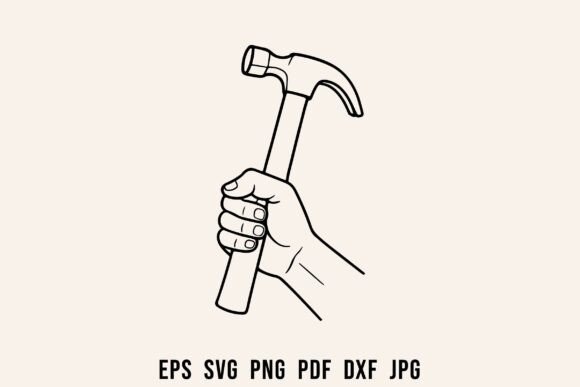
Hammer in Hand Silhouette Vector Clipart
As a designer who spends more time looking at stitch density charts than actual art, I have learned to be skeptical of any "ready-to-use" asset. The market is flooded with vector clipart that looks beautiful on a screen but falls apart when translated into thread. That is why I approach every new download with a critical eye, specifically looking for how it will behave under the needle. Recently, I pulled Hammer in Hand Silhouette Vector Clipart from the Illustrations and Graphics category to test its viability for real-world embroidery projects. This isn't just about whether the image looks cool; it is about whether it functions as a viable machine embroidery design for small business owners, crafters, and hobbyists.
The First Impression: Mood and Visual Weight
When you first open the ZIP folder containing this digital product, the silhouette stands out immediately. There is a raw, industrial energy to the shape. It is not delicate or overly ornate; it is bold. For an embroidery designer, this is a crucial distinction. Delicate silhouettes often require excessive detail stitching to read correctly, which increases hoop time and thread consumption. This design, however, relies on strong negative space and clear outlines. It feels like a tool—literally and visually. It suggests craftsmanship, construction, and hands-on work. This mood makes it naturally suited for specific niches: trade school gifts, contractor appreciation items, DIY workshop merchandise, or rustic home decor. It does not feel like a generic stock image; it has a personality that can anchor a brand identity for makers.
Real-World Application: From Screen to Stitch
I decided to put this design through its paces by simulating a few common commercial scenarios. The most immediate application that came to mind was a custom embroidered tote bag for a local hardware store or a personal branding item for a freelance carpenter. When visualizing the hammer in hand, I considered placing it centrally on a canvas tote. Because the design is a solid silhouette, it translates exceptionally well to fill stitch applications. However, the true test lies in the details of the handle and the head of the hammer. If the vector lines are too thin, they may disappear into the fabric texture during digitizing. Fortunately, the clean lines of this vector clipart suggest that a skilled digitizer could maintain clarity without over-complicating the file.
Another strong use case is sweatshirt embroidery. A chest-left placement of this silhouette works beautifully on heavyweight cotton blends. The contrast between the soft fabric and the sharp, graphic nature of the hammer creates a professional look. It also performs well as an embroidered patch, which can be ironed or sewn onto caps, aprons, or denim jackets. For Etsy sellers and small shop owners, this versatility is key. You are not limited to one product type; the same core asset can be adapted for baby embroidery (perhaps scaled down for a onesie), holiday embroidery gifts for fathers or grandfathers, or even kitchen towels for a chef who enjoys woodworking. The design bridges the gap between rugged utility and handmade charm.
Where Caution Is Required
No design is perfect for every situation, and being honest about limitations is part of responsible reviewing. There are several scenarios where Hammer in Hand Silhouette Vector Clipart requires careful handling. First, consider the hoop size. While the design might look fine on a large hooped garment, attempting to reproduce intricate parts of the hammer head in a small hoop size can lead to puckering or loss of definition. If the digitized version includes tiny text or complex internal detailing within the silhouette, it may struggle on textured fabrics like terry cloth or thick fleece.
Furthermore, the choice of stabilizer and thread colors plays a massive role in the final outcome. On stretchy fabrics, such as performance wear or thin jersey knits, a dense fill stitch around the hammer’s outline might cause distortion if not stabilized properly. Dark fabrics present another challenge; if the design relies on light thread for outlining against a dark background, ensure there is enough contrast. Conversely, using white thread on a white shirt will render the design invisible unless applique techniques are used. I also advise against using this design for products that require frequent, heavy-duty washing unless high-quality polyester threads are selected, as standard rayon may shine or fray over time if the stitch density is too high.
Impact on Brand and Customer Trust
For creative entrepreneurs and digital product sellers, the perceived value of your finished product is directly tied to the quality of the design assets you use. Using a clean, well-proportioned silhouette like this one signals professionalism. It tells the customer that attention was paid to the details. When a buyer sees a crisp, balanced hammer design on a personalized gift or a boutique apparel item, it enhances their trust in the maker. It moves the perception away from "cheap print" to "custom crafted." Additionally, because this is a vector-based graphic, it allows for scalability in your marketing materials. You can use the original vector for printable mockups, social media posts, and design assets without losing resolution, ensuring consistent brand presentation across all platforms.
Practical Designer Notes Before You Start
If you are planning to incorporate this into your craft business or personal projects, here are some essential steps to ensure success:
- Test on Scrap Fabric: Always run a test stitch on a piece of scrap fabric that matches the weight and texture of your final project. This reveals potential issues with tension or stabilizer compatibility.
- Check Thread Color Contrast: Evaluate how different thread colors interact with the silhouette. Black thread on navy fabric might lack definition, while gold thread might pop unexpectedly well depending on the lighting.
- Review Stitch Density: Ensure the digitized file does not have excessive density in the hammer head, which can make the fabric stiff and uncomfortable.
- Confirm Hoop Size: Verify that the design fits comfortably within your intended hoop size, leaving adequate margin for stitching accuracy.
- Inspect Small Details: Zoom in on the vector before digitizing. Are there any jagged edges or unnecessary nodes that could complicate the satin stitch or running stitch paths?
- Black and White Mockups: View the design in black and white to assess its form and balance without the distraction of color.
- Licensing Check: Since this is a digital product, carefully review the license terms. Confirm whether you are allowed to sell finished physical goods made from this design, especially if you are an Etsy seller or operating a small shop product line.
In conclusion, Hammer in Hand Silhouette Vector Clipart offers a strong foundation for a variety of embroidery projects. Its bold aesthetic and clean structure make it a practical choice for custom apparel, personalized gifts, and commercial embroidery ventures. By paying attention to fabric choices, stabilizers, and proper testing, designers can transform this simple graphic into a high-value, professional finished product that resonates with customers who appreciate quality and craftsmanship.